For years, SEO followed a simple recipe: pick a keyword, write a page around it, repeat the keyword a few times and wait for rankings. That recipe has stopped working.
Google no longer matches words on a page to words in a search box. It tries to understand what the person actually wants. That shift is why search intent and topic clusters now matter more than any single keyword. If your website is still built as a pile of separate keyword pages, this guide will show you what to change.
What Is Search Intent?
Search intent is the reason behind a search. Two people can type almost the same words and want completely different things.
There are four main types:
- Informational: the person wants to learn something. Example: “what is local SEO”.
- Navigational: the person wants a specific site or page. Example: “ABIR IT Solution blog”.
- Commercial investigation: the person is comparing options. Example: “best SEO company in Mohali”.
- Transactional: the person is ready to act. Example: “hire SEO expert”, “buy SEO package”.
If your page targets a keyword but ignores the intent, Google will not rank it. A sales page will not beat a how-to guide for a “how to” query, however well it is optimized.
Why Single-Keyword Pages Stop Working
Building one page per keyword creates several problems.
1. Pages compete with each other. If you have separate pages for “SEO tips”, “SEO tips for small business” and “best SEO tips”, they fight for the same rankings. This is called keyword cannibalization, and it often leaves all of them stuck on page two.
2. Thin content. One keyword rarely justifies a deep page. You end up with short, repetitive articles that do not answer the full question.
3. No topical authority. Google rewards sites that cover a subject thoroughly. A scattered set of single pages shows that you know a little about many things, not a lot about one thing.
4. Weak user journey. A visitor reads one article, finds no next step and leaves. Your leads leave with them.
What Are Topic Clusters?
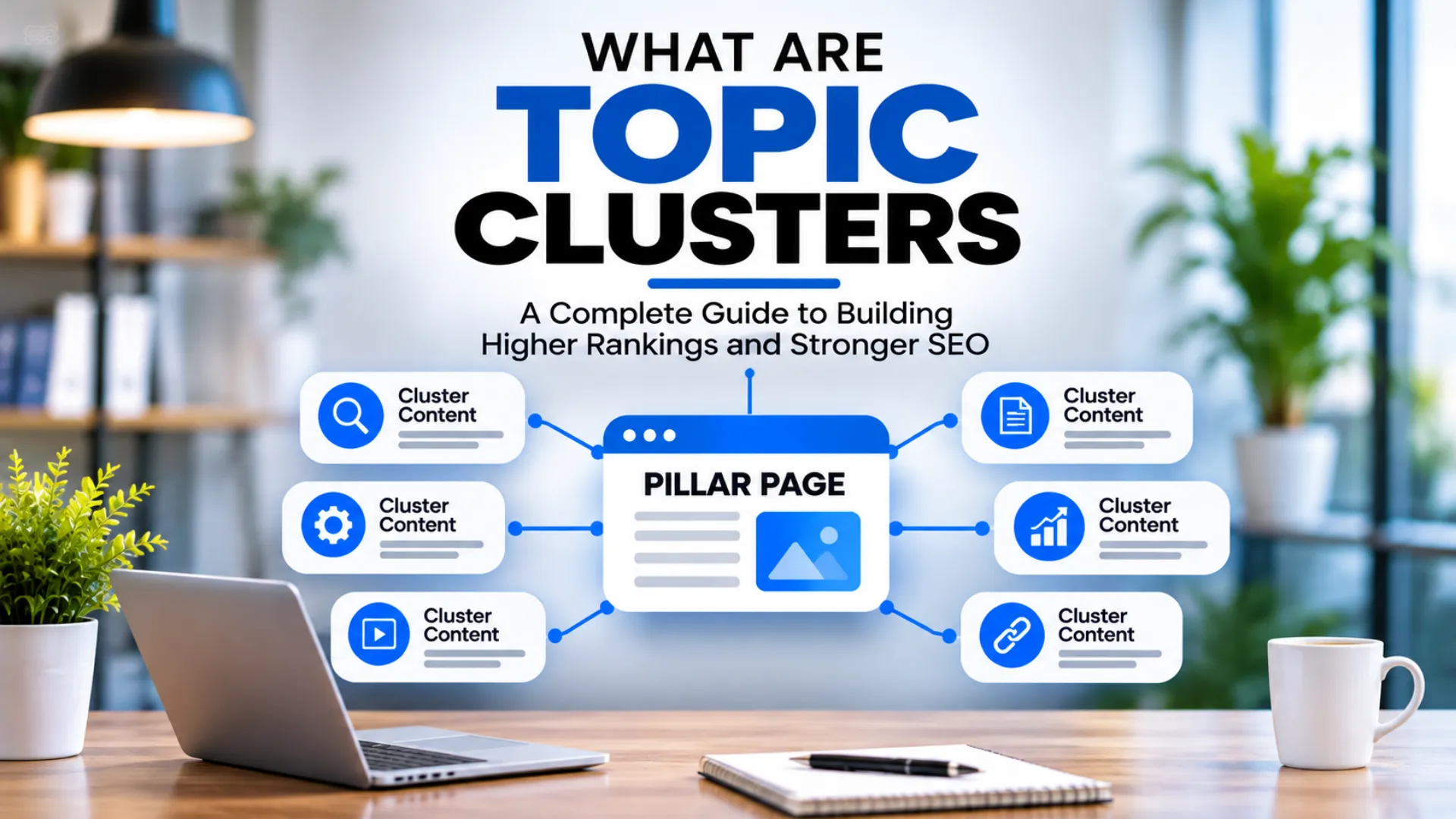
A topic cluster (or content cluster) is a group of connected pages built around one core subject. It has three parts:
- Pillar page: a broad, in-depth guide covering the main topic. Example: “Complete Guide to Local SEO”.
- Cluster pages: focused articles that go deep on subtopics. Example: “How to Optimize Your Google Business Profile”, “How to Get More Google Reviews”, “Local Citations Explained”.
- Internal links: every cluster page links up to the pillar, the pillar links down to every cluster page, and related cluster pages link to each other.
This hub-and-spoke structure tells Google that your site covers the topic from every angle, which builds topical authority.
Why Topic Clusters Beat Single-Keyword Pages
1. They match the whole customer journey
One person may search “what is SEO” today, “SEO vs PPC” next week and “SEO services in Mohali” when ready to buy. A cluster serves all three stages, so you are present at every step instead of only one.
2. They build topical authority
When many connected pages cover a subject in depth, search engines treat your site as a reliable source. That helps even your newer pages rank faster.
3. They remove keyword cannibalization
Each page in a cluster has a clear, distinct job and intent. No two pages fight for the same query.
4. They improve internal linking and crawlability
Logical links help Google find, crawl and understand every page. They also pass authority from strong pages to newer ones.
5. They get cited by AI search
AI Overviews and chatbots prefer sources that cover a topic completely and clearly. A well-built cluster gives them more passages worth quoting.
6. They turn readers into leads
A visitor who moves from an educational article to a service page is a warmer lead than one who lands cold. This is the same reason educational content generates better leads than promotional content.
How to Build a Topic Cluster Step by Step
Step 1: Choose a core topic tied to a service you sell.
Pick a subject that connects to a revenue page, for example local SEO, Google Ads or social media marketing.
Step 2: Research subtopics and questions.
List every question your customers ask. Use Google’s “People also ask”, related searches and your own sales conversations. This is where proper keyword research still matters, but you group keywords by topic rather than assigning one per page.
Step 3: Group keywords by intent.
Keywords that show the same intent belong on the same page. If the top results for two keywords are the same pages, one article should cover both.
Step 4: Write the pillar page.
Cover the topic broadly, answer the main questions and link out to each cluster page for detail.
Step 5: Write the cluster pages.
Each one should answer a single specific question better than anyone else, then link back to the pillar.
Step 6: Link everything deliberately.
Use descriptive anchor text, such as “Google Business Profile optimization”, rather than “click here”. Link to the relevant service page wherever a reader might be ready to act.
Step 7: Update and expand.
Add new cluster pages as new questions appear, and refresh older ones.
A Real Example: A Local SEO Cluster
Here is how a cluster for a local service business might look:
- Pillar: Local SEO Guide for Businesses
- Cluster 1: How to Rank Higher on Google Maps
- Cluster 2: Why Your Google Business Profile Isn’t Showing Up
- Cluster 3: How to Get More Google Reviews
- Cluster 4: How to Respond to Negative Reviews
- Money page: SEO Services in Mohali
Each article answers a different question, links to the pillar and to its neighbors, and finally points the reader to the service page.
Common Mistakes to Avoid
- Creating clusters with no pillar page or no links between pages
- Writing cluster pages that repeat each other instead of covering new subtopics
- Ignoring intent, such as writing a blog for a keyword where Google shows only service pages
- Stuffing keywords instead of answering the question
- Publishing once and never updating
How to Check Your Content for Intent Match
Before writing any page, search your target keyword and look at page one:
- Are the results guides, lists, product pages or service pages?
- What questions do the top pages answer?
- What is missing that you could add?
Match the format Google already rewards, then make yours more complete and more useful.
Final Thoughts
SEO has moved from “which keyword should I target?” to “what does my customer need to know, and how do I answer all of it?” Topic clusters give you a way to do exactly that: they organize your content around real intent, build authority and lead readers toward your services.
If you want help planning a content cluster for your business, explore our SEO services, or contact ABIR IT SOLUTION for a free consultation.