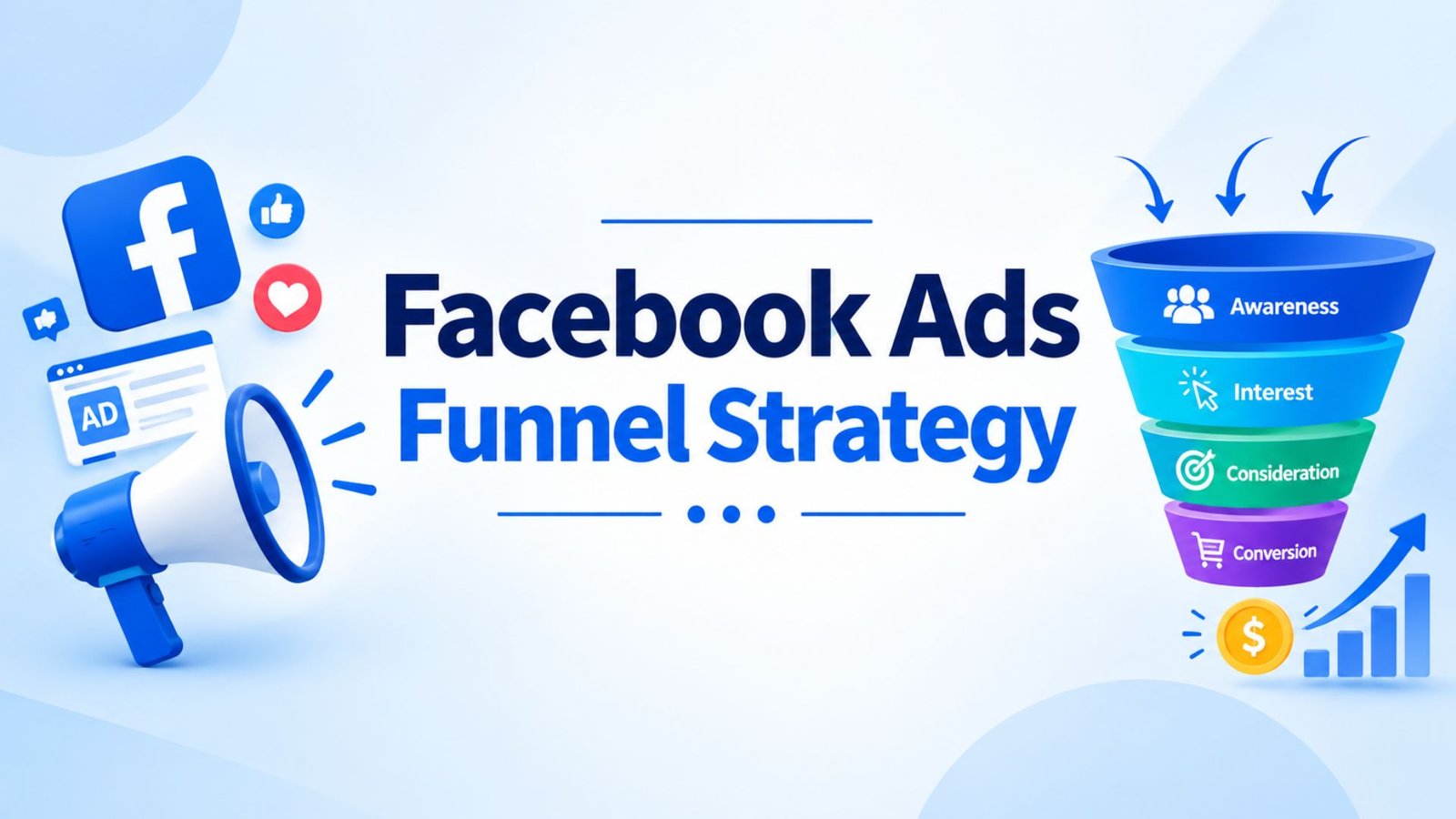
Running Facebook Ads is easy. Turning those ads into consistent leads and sales is much harder.
Many businesses make the same mistake: they create one ad, target an audience, send everyone to a landing page, and expect conversions.
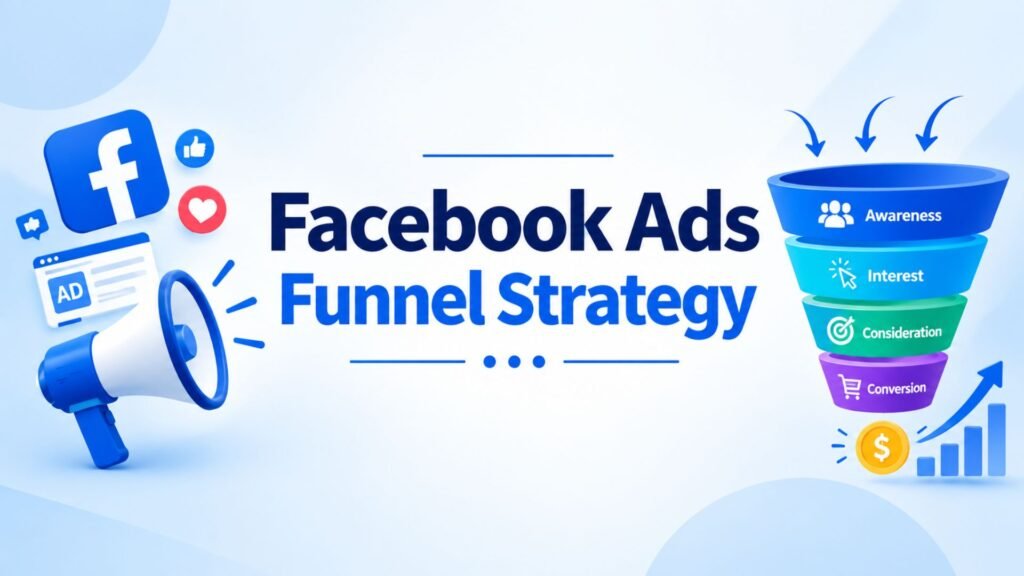
A better approach is to build a Facebook Ads funnel strategy that moves people through different stages of the buying journey – from discovering your brand to becoming a customer.
What Is a Facebook Ads Funnel?
A Facebook Ads funnel is a structured advertising strategy that targets people differently based on where they are in the customer journey.
Instead of showing the same message to everyone, you create campaigns for different stages:
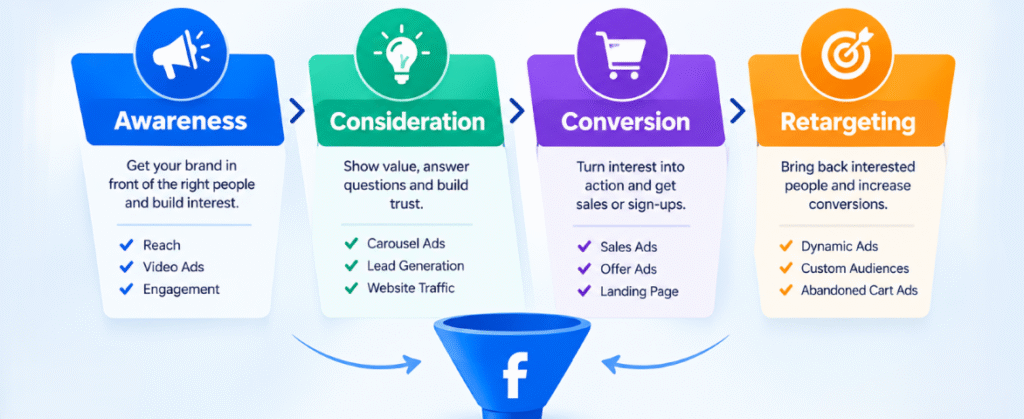
Awareness → Consideration → Conversion → Retargeting
Each stage has a different goal, audience, message, and offer.
For example:
- Cold audience: Introduce your brand and solve a problem.
- Warm audience: Provide more information, proof, and reasons to consider your offer.
- High-intent audience: Give them a strong reason to take action.
- Existing visitors/leads: Retarget them with relevant offers and follow-ups.
Why Your Facebook Ads Need a Funnel
A person seeing your business for the first time may not be ready to buy immediately.
They may:
Not know your brand
Be researching different solutions
Compare competitors
Visit your website and leave
Interact with your content but take no action
Need additional information before contacting you
A funnel allows you to match your advertising message to their level of awareness.
Instead of asking every person to “Buy Now” or “Contact Us,” you gradually build familiarity, trust and intent.
The 4 Stages of a Facebook Ads Funnel
1. Awareness: Reach the Right People
The top of the funnel focuses on people who have little or no previous interaction with your business.
Your goal is to introduce your brand and get the right audience interested.
You can use:
Educational videos
Problem-focused content
Industry insights
Short-form videos
Helpful guides
Brand-focused creatives
At this stage, avoid making the ad overly sales-focused.
For example, instead of:
“Buy Our Marketing Package Today.”
A digital marketing agency could use:
“Getting website traffic but not enough leads? Here are 5 reasons it may be happening.”
The second message addresses a problem before presenting a service.
2. Consideration: Build Interest and Trust
Once people have interacted with your brand, you can move them into the consideration stage.
These may include people who:
Watched your videos
Engaged with your Facebook or Instagram content
Visited your website
Viewed important pages
Downloaded a resource
Previously interacted with your ads
Now your messaging can become more specific.
You can use:
Case studies
Testimonials
Product demonstrations
Detailed educational content
Before-and-after results
FAQs
Service benefits
The objective is to answer the question:
“Why should I consider this business?”
3. Conversion: Turn Intent Into Action
At the bottom of the funnel, you are targeting people who have shown stronger buying intent.
Your goal is to generate a specific action, such as:
Submit a lead form
Book a consultation
Request a quote
Start a free trial
Make a purchase
Call your business
Your messaging should be direct and focused on the next step.
For example:
“Need more qualified B2B leads? Get a free website and marketing audit.”
The offer should make it easy for the prospect to understand what happens next.
4. Retargeting: Bring Back Lost Opportunities
Not everyone converts on their first visit.
This is where Facebook Ads retargeting becomes important.
You can create audiences based on actions such as:
Website visitors
Product viewers
Landing-page visitors
Video viewers
Facebook or Instagram engagers
Previous leads
People who started but didn’t complete an action
Instead of showing the same advertisement again, give them a reason to return.
For example:
- First interaction: “Learn how our service can solve your problem.”
- Retargeting ad: “Still looking for a solution? See how businesses are using our service to improve their results.”
Retargeting should add something new rather than simply repeating the original advertisement.
A Simple Facebook Ads Funnel Example
Imagine a B2B company wants to generate leads through Facebook Ads.
Stage 1 — Awareness
Target relevant business audiences with educational content.
Ad: “5 Reasons Your Business Website Isn’t Generating Enough Leads”
↓
Stage 2 — Consideration
Retarget people who watched the video or engaged with the content.
Ad: “See how we identify website, SEO, and conversion problems through a complete audit.”
↓
Stage 3 — Conversion
Target high-intent visitors and engaged users.
Ad: “Get a Free Website & Marketing Audit.”
↓
Stage 4 — Retargeting
Retarget people who visited the landing page but didn’t submit the form.
Ad: “Not sure what’s holding your website back? Let’s identify the gaps.”
This creates a connected customer journey instead of four unrelated advertisements.
Facebook Ads Funnel for Ecommerce
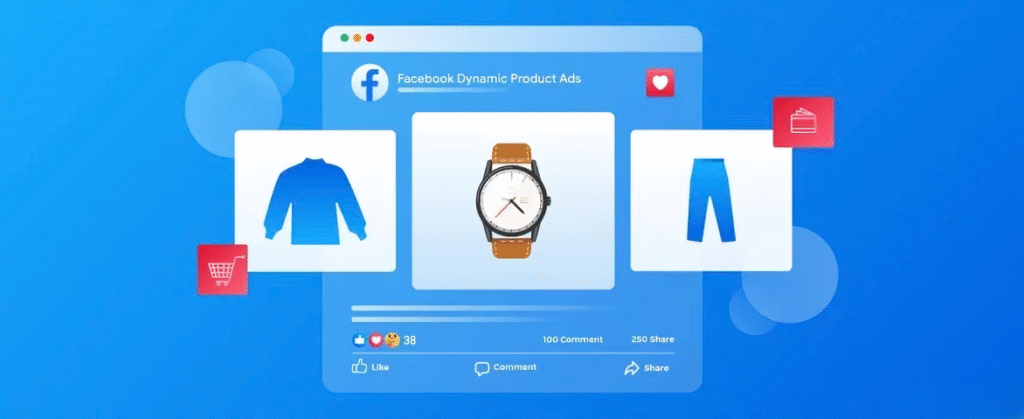
An ecommerce funnel can work slightly differently.
A basic structure could look like:
Awareness → Product Interest → Product View → Add to Cart → Purchase → Retargeting
For example:
- Awareness: Introduce the product through video or lifestyle creatives.
- Product Interest: Show product benefits, features, and use cases.
- Product Viewers: Retarget people who viewed specific products.
- Add-to-Cart: Remind users about the product and address objections.
- Purchase: Use stronger offers, social proof, or urgency where appropriate.
- Existing Customers: Promote complementary products, repeat purchases, or new launches.
The key is to connect your audience data with the right message at each stage.
Facebook Ads Funnel for B2B Lead Generation
B2B businesses often have a longer sales cycle, so expecting a cold audience to submit a lead form immediately may not work for every business.
A B2B funnel could look like:
Educational Content → Engagement → Website Visit → Lead Magnet/Audit → Consultation → Sales
For example:
Ad 1: “Why are your competitors ranking above you?”
Ad 2: “Download our SEO checklist.”
Ad 3: “Get a free website audit.”
Ad 4: “Book a strategy call.”
This approach allows businesses to build familiarity before asking for a higher-commitment action.
What Makes a Facebook Ads Funnel Work?
A funnel isn’t just about creating multiple campaigns.
Several elements need to work together.
1. Audience Segmentation
Different audiences need different messages.
Separate cold audiences from people who already know your business.
2. Relevant Ad Creatives
Your creative should match the funnel stage.
An awareness ad doesn’t necessarily need the same design or message as a conversion ad.
3. Strong Landing Pages
Getting clicks is only part of the process.
Your landing page should clearly communicate:
What you’re offering
Who it’s for
The problem it solves
Why your business
What the visitor should do next
4. Conversion Tracking
Without accurate tracking, it’s difficult to understand which campaigns are actually producing results.
Track meaningful actions such as:
Leads
Purchases
Calls
Form submissions
Bookings
Qualified inquiries
5. Continuous Optimization
A Facebook Ads funnel isn’t something you build once and leave untouched.
Review performance regularly and optimize:
Audience targeting
Ad creatives
Copy
Offers
Landing pages
Budget allocation
Retargeting audiences
Common Facebook Ads Funnel Mistakes
- Sending Every Audience to the Same Offer: A first-time visitor and a previous customer shouldn’t necessarily see the same message.
- Focusing Only on Clicks: A campaign can generate inexpensive clicks without generating qualified leads or sales.
- Ignoring Retargeting: People who already interacted with your business can represent an important audience.
- Using the Same Creative for Too Long: Ad fatigue can reduce engagement and performance over time.
- Not Connecting Ads With the Sales Process: Generating leads is not the end of the funnel.
Businesses also need a process for following up, qualifying leads and converting them into customers.
How to Build Your Facebook Ads Funnel
A practical process looks like this:
1. Define your business goal
Determine whether you’re focused on leads, sales, bookings or another measurable action.
2. Understand your audience
Identify their problems, objections, needs and buying journey.
3. Divide the customer journey into stages
Create awareness, consideration, conversion and retargeting campaigns where appropriate.
4. Create stage-specific messaging
Give each audience a reason to move to the next stage.
5. Build the landing-page experience
Make sure the page supports the promise made in the advertisement.
6. Set up tracking
Measure the actions that matter to your business.
7. Test and optimize
Use performance data to improve targeting, creative, offers, and conversion rates.
Final Thoughts
A successful Facebook Ads strategy isn’t simply about getting more people to click your ads.
It’s about creating a customer journey that takes the right person from awareness to consideration and eventually, conversion.
When your audience targeting, creative, landing pages, retargeting, tracking and sales process work together, Facebook Ads become part of a complete marketing funnel rather than a collection of disconnected campaigns.
If you’re spending money on Facebook or Meta Ads but aren’t getting enough qualified leads or sales, the problem may not be your ad alone – it could be the funnel behind it.
FAQs about Facebook ads funnel
It shows different ads and messages based on where users are in the buying journey, from discovering your brand to becoming a customer.
The main stages are awareness, consideration, conversion, and retargeting. Each stage targets users with different levels of interest and intent.
Yes. Small businesses can use funnel-based Facebook Ads to build awareness, generate leads, retarget visitors and drive conversions with controlled budgets.
Retargeting reconnects with people who have already interacted with your business, such as website visitors, video viewers or social media engagers.
Use educational and problem-focused content for awareness, testimonials and case studies for consideration and offers or clear calls to action for conversion.
Test different audiences, creatives, ad copy, offers, landing pages, and retargeting campaigns, then use conversion data to optimize the funnel.