
If you’re running a business, you’ve probably heard terms like branding, brand identity, graphic design, logo design, and visual identity.
These terms are closely connected, but they don’t mean the same thing.
One of the most common misunderstandings is thinking that branding and graphic design are interchangeable. They aren’t.
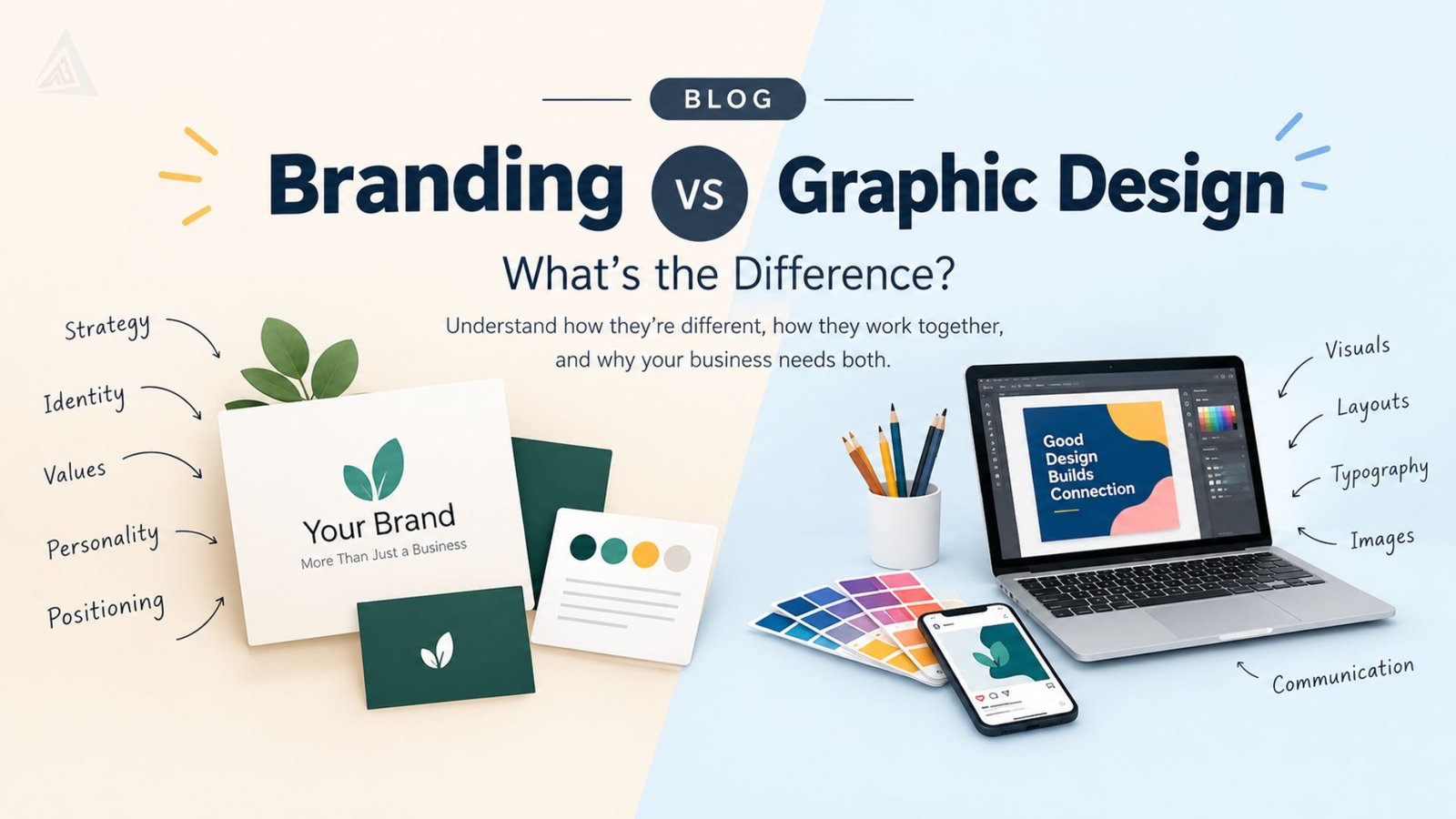
Branding is about defining who your business is, what it stands for, how it should be perceived, and how it communicates with people.
Graphic design is about using visual elements to communicate ideas, information, and messages effectively.
In simple terms:
" Branding defines the identity. Graphic design helps communicate that identity visually.
Let’s break down the difference in a simple and practical way.
What Is Branding?
Branding is the process of creating a distinct identity for a business, product, or organization.
It goes much deeper than creating a logo.
A brand represents the overall impression people have when they interact with your business. It includes your visual identity, communication style, positioning, personality, values, and the experience you provide.
For example, imagine two digital marketing agencies offer similar services.
One communicates in a professional, confident, and corporate tone. Its website uses consistent colors, typography, imagery, and messaging.
The other uses different colors on every platform, inconsistent messaging, and random visual styles.
Even if both agencies provide similar services, people may perceive the first business as more established and trustworthy.
That perception is part of branding.
Branding Can Include:
- Brand strategy
- Brand positioning
- Target audience
- Brand personality
- Brand values
- Brand voice and tone
- Brand messaging
- Logo and visual identity
- Color palette
- Typography
- Photography and imagery style
- Brand guidelines
- Customer experience
So, branding is essentially about answering:
“Who are we as a business, and how do we want people to perceive us?”
What Is Graphic Design?
Graphic design is the process of communicating information or ideas through visual elements.
A graphic designer combines things such as:
- Typography
- Colors
- Images
- Shapes
- Layouts
- Illustrations
- Icons
- Visual hierarchy
- Spacing
The goal is not simply to make something look attractive.
Good graphic design should make information easier to understand, create visual interest, communicate a message, and guide the viewer’s attention.
For example, a business may need:
- Social media posts
- Brochures
- Flyers
- Business cards
- Advertisements
- Presentations
- Website graphics
- Infographics
- Product packaging
- Email graphics
- Digital ads
These are graphic design applications.
A designer decides how information should be presented visually so that the audience can understand and respond to it.
👉 Read more: What Is Graphic Design? A Complete Beginner’s Guide
Branding vs Graphic Design: The Main Difference
The easiest way to understand the difference is to think about strategy vs execution.
Branding establishes the foundation.
Graphic design uses visual communication to bring that foundation to life.
Branding | Graphic Design |
Defines the brand identity | Communicates through visuals |
Focuses on perception | Focuses on visual communication |
Includes strategy | Includes creative execution |
Defines personality and positioning | Creates visual materials |
Establishes consistency | Applies consistency |
Long-term brand-focused activity | Used across individual projects |
Answers “Who are we?” | Answers “How should this look?” |
However, branding and graphic design are not completely separate.
They work together.
Branding Is More Than a Logo
One of the biggest misconceptions about branding is:
“We already have a logo, so we already have a brand.”
A logo is only one part of a brand’s visual identity.
Think about some well-known businesses. You can often recognize them before seeing their name.
Why?
Because their identity is consistent across multiple touchpoints.
You may recognize their:
- Colors
- Typography
- Packaging
- Photography
- Advertising style
- Tone of communication
- Website experience
- Social media visuals
That consistency doesn’t happen by accident.
It comes from a broader branding system.
A logo identifies the business.
Branding gives the business meaning and personality.
How Graphic Design Supports Branding
Once a business has established its brand identity, graphic design helps apply that identity across different communication channels.
For example, suppose a company has established:
- Brand personality: Professional, modern and trustworthy
- Primary colors: Dark blue and white
- Typography: Clean and modern
- Communication style: Clear, confident and straightforward
A graphic designer can use these brand elements to create:
- Website banners
- Social media posts
- Google Ads creatives
- Brochures
- Presentations
- Business cards
- Email graphics
- Promotional materials
Because these designs follow the same visual direction, customers begin to associate those visual elements with the business.
This is where branding and graphic design work together.
A Simple Example
Imagine you are launching a new coffee shop.
Branding might determine:
- Who your target customers are
- What makes your coffee shop different
- Whether the brand feels premium, casual, traditional, or modern
- Your brand personality
- Your messaging style
- Your colors
- Your typography
- Your overall visual identity
Graphic design might create:
- Logo
- Menu
- Packaging
- Instagram posts
- Posters
- Loyalty cards
- Store signage
- Promotional advertisements
- Website graphics
The branding establishes the direction.
Graphic design creates the visual materials that communicate that direction.
Why Businesses Need Both
Having good graphic design without a clear brand strategy can create attractive visuals that don’t communicate a consistent identity.
On the other hand, having a strong brand strategy without good design can make it difficult to communicate that identity effectively.
Businesses need both because customers interact with brands through many different touchpoints.
Someone might discover your business through:
Google → Website → Instagram → Advertisement → Brochure → Sales Team
If every touchpoint looks and feels different, the business can appear inconsistent.
But when the same brand identity is reflected across these channels, the experience becomes more connected.
Branding Creates Consistency
Consistency is one of the biggest benefits of having a clear brand.
Imagine seeing a company use:
- Blue on its website
- Green on Instagram
- Red in advertisements
- Five different fonts
- Different logo versions
- Different messaging styles
The individual designs might not necessarily be bad, but together they create confusion.
A strong brand establishes rules for how the business should present itself.
Graphic design then follows those rules.
This creates a more recognizable visual identity.
Does Graphic Design Create a Brand?
Graphic design can contribute significantly to a brand, but graphic design alone doesn’t create the entire brand.
- A visually attractive logo cannot fix unclear positioning.
- A beautiful website cannot automatically create customer trust.
- A great social media post cannot define what makes a company different from its competitors.
- Design is an important part of the brand experience, but branding goes beyond visual appearance.
A business needs a clear foundation first.
Then design can help communicate that foundation.
👉 Read more: Why Graphic Design Matters for Every Business
Can You Have Graphic Design Without Branding?
Yes.
For example, a business might ask a designer to create a flyer for a one-time event.
The designer can create an effective flyer without developing a complete brand strategy.
But when a business wants to build a recognizable identity across its website, social media, advertising, packaging, and other marketing channels, branding becomes much more important.
Without clear brand guidelines, designs can become inconsistent over time.
Can You Have Branding Without Graphic Design?
A business can develop a brand strategy without immediately creating every visual asset.
It can define:
- Target audience
- Positioning
- Values
- Personality
- Voice
- Messaging
- Customer experience
But eventually, these ideas need to be communicated visually and practically.
That’s where graphic design service becomes important.
A brand may know exactly who it is, but customers need to see and experience that identity.
Common Mistakes Businesses Make
A logo is an identifier.
Your brand is the broader identity and perception surrounding your business.
Not every design needs to simply “look good.”
It should have a purpose.
Is it supposed to inform, attract attention, build trust, generate leads or encourage an action?
Frequent changes to colors, fonts, imagery, and layouts can make a business difficult to recognize.
Your website, social media, advertisements, brochures, and presentations should feel like they belong to the same business.
Good branding isn’t just about making a company look professional.
It is also about creating a clear identity that connects with the right audience.
Branding vs Graphic Design: Which One Does Your Business Need?
The answer depends on your current situation.
If you’re starting a new business:
You may need branding first.
Define your positioning, audience, personality, messaging, and visual identity before creating a large number of marketing materials.
If you already have a brand:
You may primarily need graphic design to create marketing materials that follow your existing identity.
If your business looks different everywhere:
You may need both.
A branding process can establish a consistent identity, while graphic design can apply that identity across your marketing channels.
The Relationship Between Branding and Graphic Design
Think of branding as the blueprint and graphic design as one of the tools used to build from that blueprint.
Branding answers:
- Who are we?
- Who are we trying to reach?
- What do we stand for?
- How should people perceive us?
Graphic design answers:
- How can we communicate this visually?
- What should this advertisement look like?
- How should this information be presented?
- How can we make this visual message clear and engaging?
Neither is a replacement for the other.
They serve different purposes.
Final Thoughts
Branding and graphic design are closely connected, but they are not the same thing.
Branding establishes the identity, strategy, personality, and overall direction of a business. Graphic design communicates ideas and creates visual materials that help bring that identity to life.
If you only focus on design, your business may look good but lack a clear identity.
If you only focus on strategy, you may have a strong brand foundation but struggle to communicate it visually.
The strongest businesses bring both together.
A clear brand tells people who you are. Good graphic design helps them recognize, understand, and remember you.