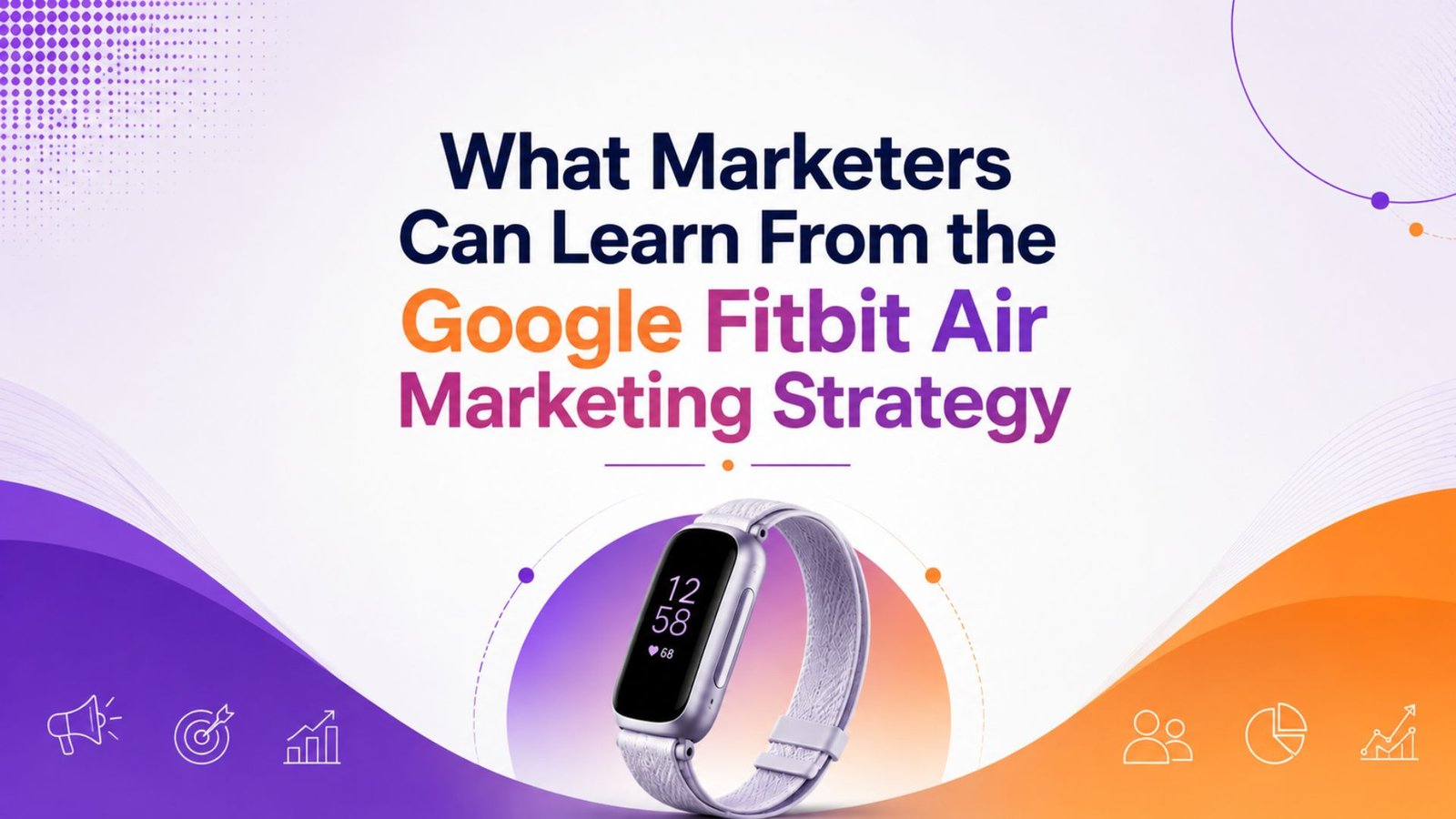
The Google Fitbit Air is getting attention for an interesting reason: Google isn’t simply selling another fitness tracker.
It’s selling a different experience.
Fitbit Air is screenless, lightweight, designed for continuous wear, and connected to the Google Health app for deeper insights. Google has positioned it around simplicity, comfort, health tracking, and less distraction.
For marketers, there are several lessons worth paying attention to.
1. Sell the Problem You Solve, Not Just the Product
Google isn’t only saying:
“Here’s our new fitness tracker.”
The messaging focuses on problems people have with traditional wearables:
- Too many notifications
- Bulky devices
- Shorter battery life
- Too much screen interaction
- Complicated health data
The product is positioned as a solution to those problems.
Marketing lesson:
Don’t just explain what your product does.
Explain why your customer needs it.
2. Differentiate With One Clear Idea
The most obvious difference is simple:
No screen.
That gives Fitbit Air an easy-to-understand positioning in a crowded fitness-tracker market.
Instead of competing only on the number of features, Google has created a distinct product concept around screen-free health tracking. Recent coverage also shows growing interest in minimalist, screenless wearables.
Marketing lesson:
If your market is crowded, find one idea that makes your brand easy to remember.
3. Create Curiosity Around a New Approach
“Another fitness tracker” isn’t particularly exciting.
But:
“A fitness tracker without a screen.”
That’s different.
It creates a natural question:
“Why would I want that?”
And curiosity can drive searches, conversations, reviews, social posts, and comparisons.
Marketing lesson:
A strong marketing message can make people curious enough to learn more.
4. Connect the Product to a Larger Ecosystem
Fitbit Air isn’t marketed as an isolated device.
It’s connected to the Google Health app and Google Health Coach, creating a broader health and wellness experience.
This makes the product part of a bigger ecosystem rather than just another piece of hardware.
Marketing lesson:
Don’t market individual services or products in isolation.
Show customers how your offer fits into the bigger solution.
5. Use Trends Without Losing Your Positioning
Screenless and minimalist wearables are gaining attention.
Google entered that conversation with Fitbit Air while maintaining a clear product identity.
This is an important lesson for content marketers too.
You don’t have to chase every trend.
Instead:
Find a relevant trend → connect it to your expertise → create useful content around it.
For example, a digital marketing agency can use the Fitbit Air trend to discuss:
- Product positioning
- SEO opportunities
- Search trends
- Content marketing
- Brand differentiation
- Launch strategies
That’s much more valuable than simply writing another product review.
6. Turn Features Into Benefits
A marketer shouldn’t stop at:
“It has a screenless design.”
The stronger message is:
“You can track your health without constantly interacting with another screen.”
The difference is important.
Feature: Screenless design
Benefit: Less distraction
Feature: Lightweight design
Benefit: Comfortable for continuous wear
Feature: Health insights
Benefit: Better understanding of your health and fitness
Marketing lesson:
Translate features into outcomes your audience actually cares about.
What Can Small Businesses Learn From This?
You don’t need Google’s budget to apply these principles.
You can start with three questions:
1. What problem does my product/service solve?
2. What makes my solution different?
3. Can I explain that difference in one simple sentence?
If your audience understands those three things quickly, your marketing becomes much stronger.
The Bigger Lesson
The Fitbit Air launch is a good reminder that successful marketing isn’t always about adding more features or creating more content.
It’s about finding the right message.
A clear problem.
A clear difference.
A clear benefit.
And a reason for people to care.
That’s the kind of positioning that makes a product—and a marketing campaign—stand out.